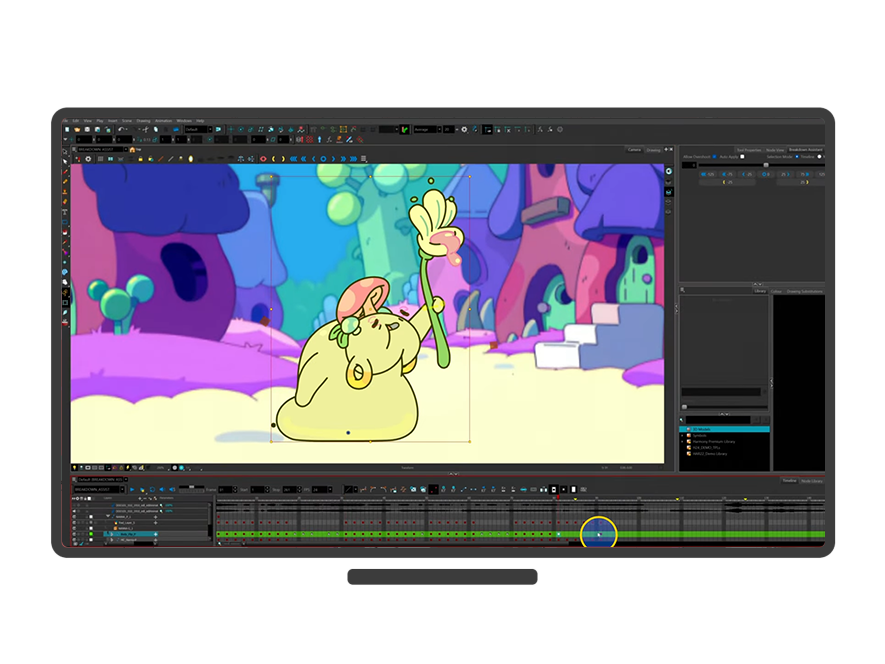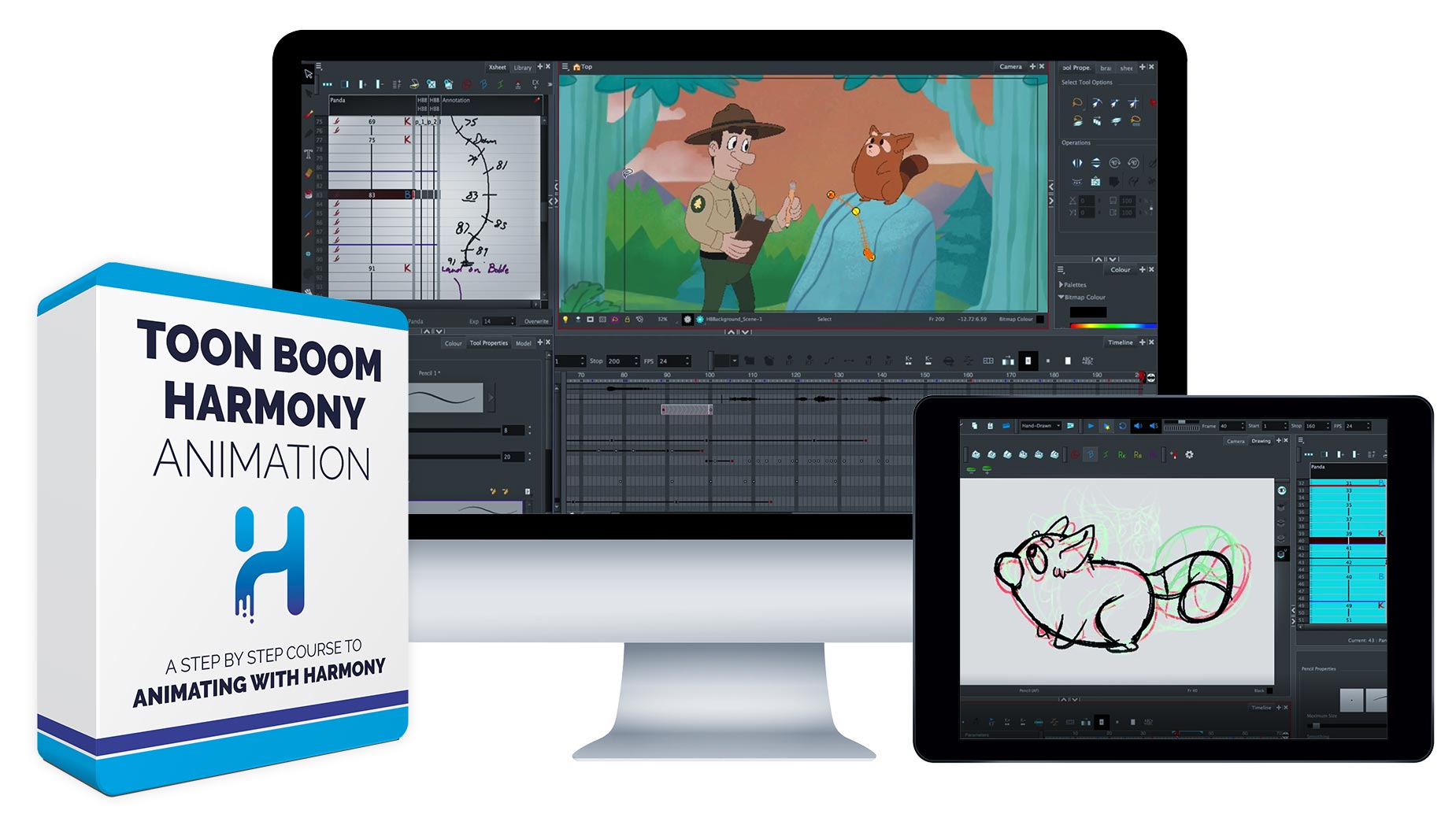
When it comes to 2D animation, two names frequently appear in Google searches, forums, and social media discussions: Toon Boom Harmony and Adobe Animate. Although both allow the creation of two-dimensional animation, they are designed for very different audiences and workflows. Understanding these differences is essential to choosing the right tool based on project type, professional level, and production goals.
Toon Boom Harmony is specifically designed for the professional animation industry. It is the software of choice for studios producing television series, streaming content, and animated feature films. Its main strengths lie in advanced rigging, the node-based system, and its ability to scale complex productions with multiple characters, scenes, and episodes. Adobe Animate, on the other hand, has a more general-purpose approach. It evolved from Flash and is primarily focused on lightweight animation, web content, simple motion graphics, and educational or advertising projects.
One of the most significant differences between the two tools is their workflow structure. Toon Boom Harmony uses a node-based approach that clearly separates drawing, rigging, animation, and compositing. This allows for extremely precise control over deformers, effects, masks, cameras, and final rendering. In large-scale productions, this structure is essential for maintaining organization, reusing assets, and avoiding errors. Adobe Animate relies on a more traditional timeline-based workflow, similar to other Adobe products, which makes it more accessible for beginners but also more limited as projects grow in complexity.
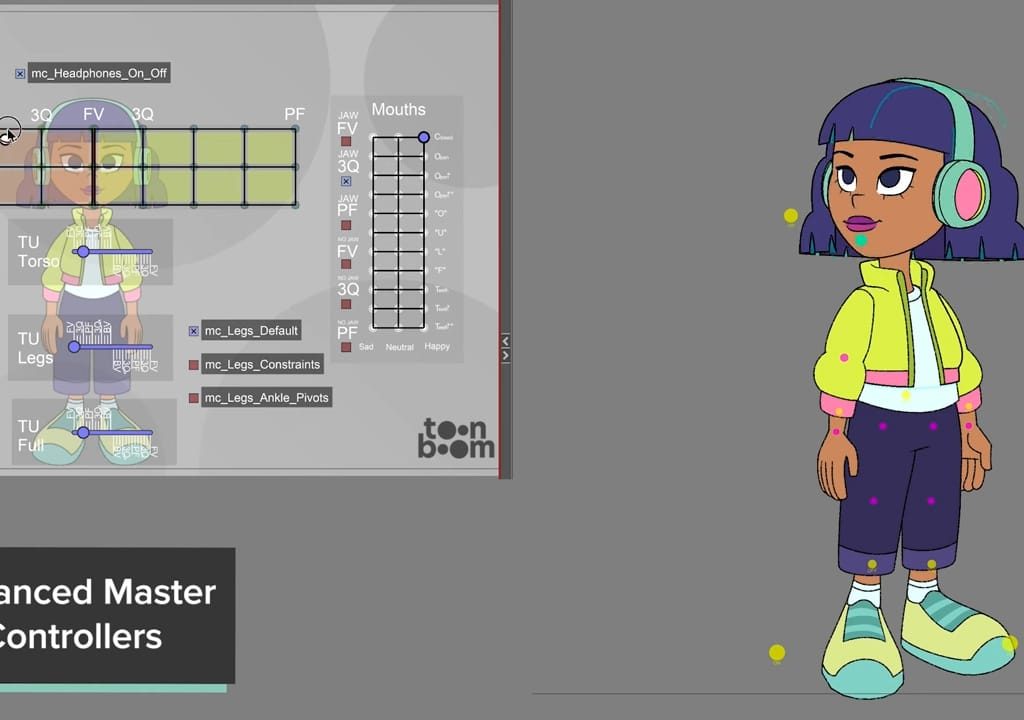
When it comes to rigging, Harmony operates on a completely different level. It allows the creation of characters with complex bone structures, mesh deformers, custom controllers, and automation systems that significantly speed up the animator’s workflow. This is critical for series with high episode counts, where consistency and efficiency are key. Adobe Animate offers basic symbol and tweening tools, which are sufficient for simple animations but fall short for high-volume professional pipelines.
Visual quality is another major differentiator. Toon Boom Harmony is designed to replicate the look and feel of traditional hand-drawn animation, with organic line quality, variable strokes, and fine control over frame-by-frame animation. Its built-in compositing system also allows advanced effects without leaving the software. Adobe Animate prioritizes simplicity and web compatibility, making it ideal for banners, interactive content, or educational animations, but less suitable for complex narrative productions.
Integration with other software also highlights key differences. Harmony adapts easily to professional pipelines that include editing, sound design, visual effects, or even 3D integration. It commonly works alongside tools like Storyboard Pro, Premiere, or After Effects within the same workflow. Adobe Animate, as part of the Adobe ecosystem, integrates seamlessly with Photoshop, Illustrator, and After Effects, which is a strong advantage for graphic designers and motion designers already working within Creative Cloud.
Regarding user profiles, Toon Boom Harmony is clearly aimed at studios, production companies, animation schools, and animators who want to work at a professional level or enter the international animation industry. In fact, many job listings at animation studios require prior experience with Harmony. Adobe Animate is often an entry point for students, web content creators, educators, or professionals who need simple animation without the complexity of an industrial-grade pipeline.
So, which one should you choose? If your goal is to produce animated series, narrative short films, streaming content, or work in professional animation studios, Toon Boom Harmony is the right choice. If your goal is to create simple animations, interactive content, lightweight motion graphics, or educational projects, Adobe Animate may be sufficient and easier to learn.
Ultimately, while both programs aim to create 2D animation, they operate in very different categories. Toon Boom Harmony does not compete on simplicity, but on power and scalability. Adobe Animate focuses on accessibility and versatility within the Adobe ecosystem. Choosing the right tool impacts not only the final visual quality but also workflow efficiency and long-term professional opportunities.