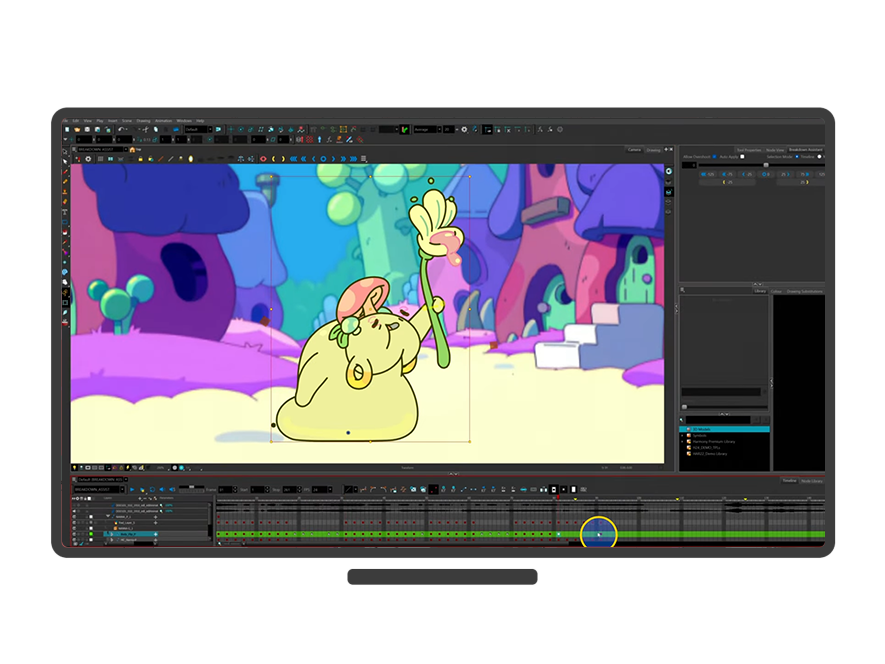
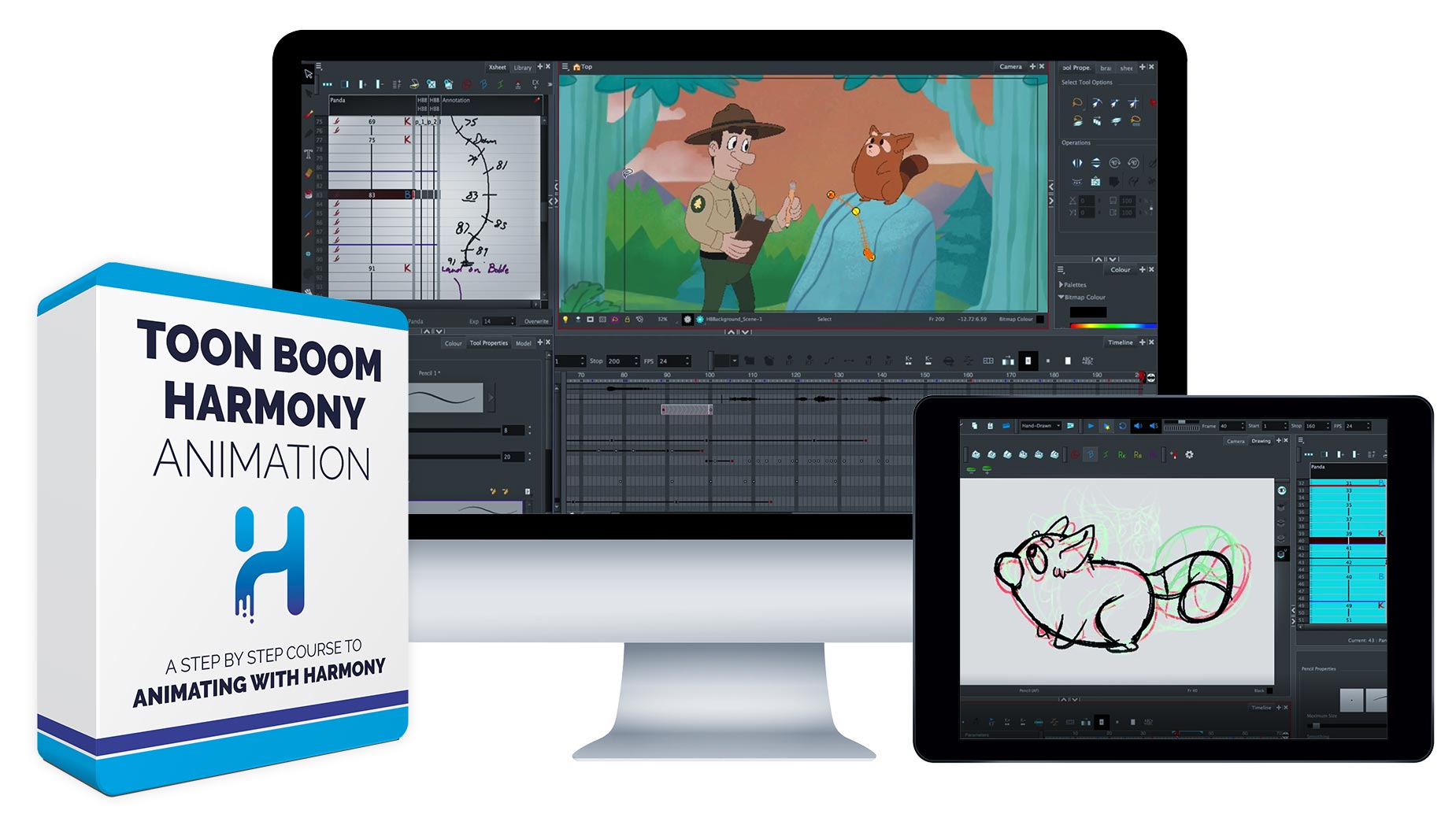
Toon Boom has become an industry standard for professional 2D animation, and much of its prestige comes from the productions that use it. From children’s shows to adult animation, many of the most acclaimed works of the last decade rely on Toon Boom Harmony and Storyboard Pro as essential parts of their pipeline. This ecosystem not only allows for consistent visual style across episodes but also enables advanced rigs, deformers, nodes, and effects that elevate the final quality of each project. Understanding which series were created with Toon Boom—and which techniques they used—helps explain why this tool dominates the industry.
One of the most iconic productions that uses Toon Boom is Rick and Morty. The series relies heavily on modular rigs and curved deformers to give characters fluidity, as well as extensive use of node systems to integrate lighting effects, distortions, and particles that give the show a more cinematic look than a traditional animated sitcom. Toon Boom allows a team working under tight deadlines to produce complex scenes without compromising visual consistency between episodes.
Another important production is The Owl House, from Disney Television Animation. Its magical aesthetic, expressive movements, and fluid linework rely on advanced deformers, multi-layered drawings tied to rigs, and creative use of texture and shading nodes. Thanks to Harmony’s tools, the team achieves an artisanal, hand-drawn feel without losing the efficiency of professional rigging.
Bob’s Burgers is also part of the catalog of shows that have adopted Toon Boom. In this case, the software enables a simple but stable rig, ideal for a high-volume production that depends on fast dialogue and subtle expressions. Animators use peg-drawing substitutions combined with lightweight rigs to maintain the show’s fresh and distinctive style. The node-based pipeline helps integrate backgrounds and effects without making the project files too heavy, which is essential for teams working with recurring environments.

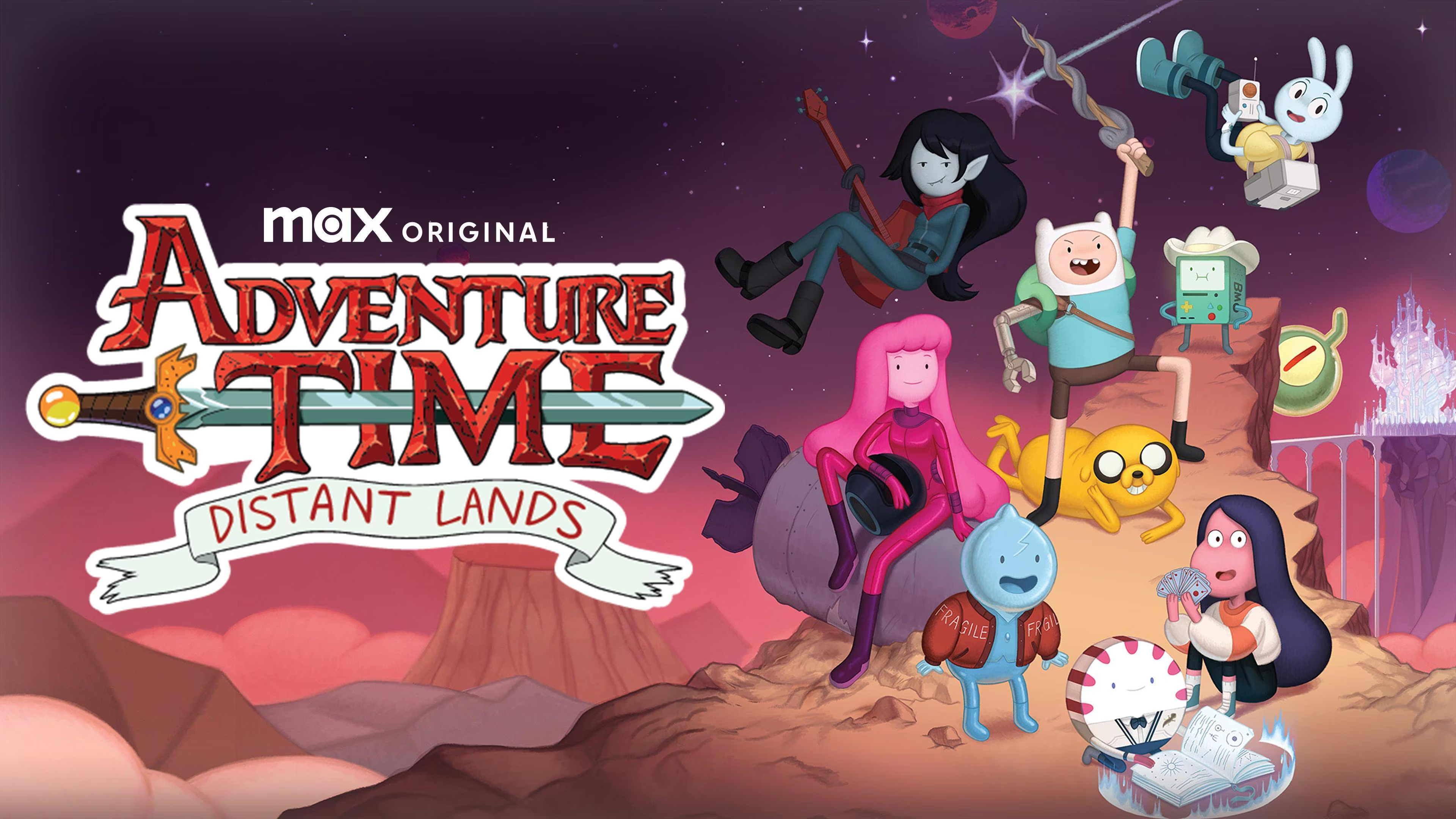
Adventure Time: Distant Lands, produced for HBO Max, also used Toon Boom to achieve fluid and expressive animation. While the original series mixed techniques, the specials adopted a more advanced approach to rigging, especially for dynamic transitions, camera movements, and experimental effects. Toon Boom made it possible to use mesh deformers and custom nodes that preserved the visual identity of the show while enhancing its technical quality.
Another standout production is Star Wars: Galaxy of Adventures, a series of animated shorts created for YouTube by Lucasfilm. Here, Toon Boom showcases its strength in hybrid styles: animators combined sophisticated rigs with hand-drawn lines, node-based shading, and comic-inspired effects. Harmony’s ability to integrate 2D effects with a more “painted” look results in a unique visual style that stands apart from traditional TV animation.

Even children’s shows like Molang or My Little Pony: Friendship Is Magic demonstrate how Toon Boom supports series with an extremely high episode count. In these cases, efficient rigging and intelligent reuse of animations allow studios to maintain visual consistency for entire seasons. These rigs often include automation, soft deformers, and control nodes that simplify repetitive actions without sacrificing expressiveness.

Toon Boom’s influence extends to Netflix originals as well, such as Hilda, where an illustrated aesthetic is paired with smooth animation. Teams use nodes to create atmospheric effects, watercolor-style textures, and complex transitions without relying on external pipelines. Integration with Storyboard Pro ensures impeccable visual continuity from the animatic phase, reducing revisions and maintaining a clear narrative structure.
All these productions demonstrate that Toon Boom is not just software for “drawing cartoons,” but a complete platform that allows studios to animate characters, add effects, control cameras, compose scenes, and automate processes. Its combination of rig-based animation, traditional drawing, and nodal compositing makes it the ideal solution for teams looking to professionalize their 2D pipeline without losing creative flexibility. Understanding the techniques behind these series reveals why Toon Boom leads the 2D animation industry worldwide.